

Generative AI: The Technical Framework Explained
Bringing AI to Your Fingertips—No Tech Jargon, Just Simple Insights

Alright Common Folks!
Welcome back! In our last chat, we dipped our toes into the amazing world of Generative AI, or GenAI for short. We saw how it's already shaking things up, from helping with customer service to sparking creativity in content creation and even changing how we learn and code. It's clear this isn't just another tech buzzword; it's here to stay and make a real difference.
Now that we have a handle on what GenAI is and why it’s a big deal, it’s time to peek under the bonnet. Think of it like this: you know your car can take you from point A to point B, and you know it needs fuel. But what about the engine, the gearbox, and all those other bits and bobs that make it actually work? That's what we're going to explore with GenAI.
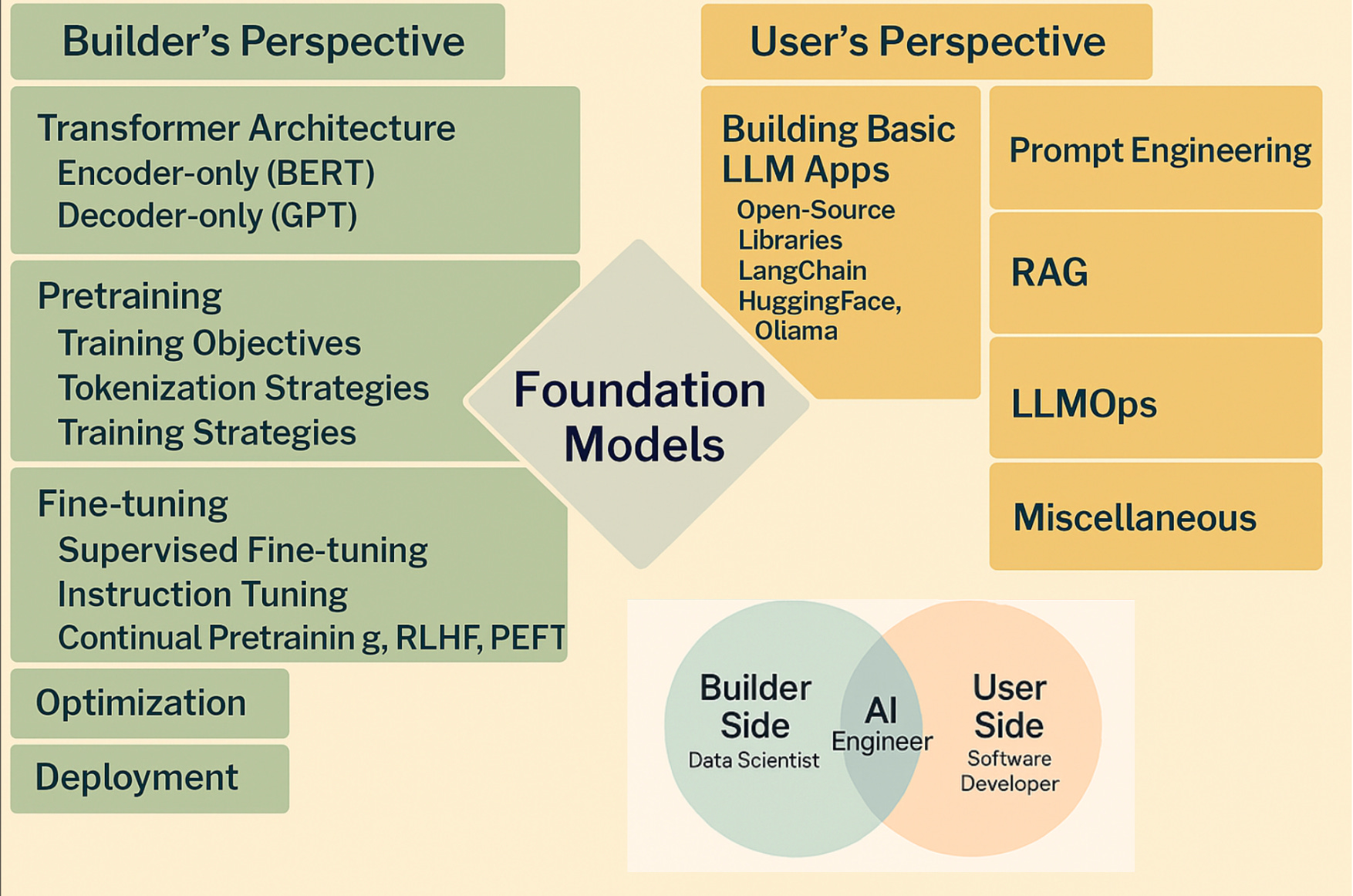
Our next step is to understand the Technical Framework behind all this magic. Don't worry, we're still keeping our promise of no jargon and simple explanations! We'll be looking at three main ideas:
• Foundation Models: The Big Brains of AI. Imagine a student who has read almost every book in the library. They have a vast amount of general knowledge. Foundation Models are similar. They are very large AI models that have been trained on a massive amount of data, like text, images, and code. Because they've seen so much, they've learned a lot of general patterns and can be used for many different tasks. Think of them as the smart engine that powers many different AI applications.
• The Builder Perspective: Creating the Brains. Now, who builds these incredibly knowledgeable AI brains? That's where the builders come in. These are the data scientists and Machine Learning Engineers who design, train, and fine-tune these Foundation Models. They are the ones who feed the 'student' (the model) all those books and make sure they learn effectively. They figure out the best way for the AI to learn and improve its abilities.
• The User Perspective: Putting the Brains to Work. On the other side, we have the users. These are people like you and me, or businesses, who take these ready-made Foundation Models and use them to build specific applications. Think of someone taking that powerful engine and putting it into a car, a truck, or even a boat – depending on what they need it to do. For example, someone might take a large language model (a type of Foundation Model) and use it to build a chatbot for customer service. They don't necessarily need to know all the intricate details of how the model was built; they just use its capabilities to solve a problem or create something new.
How it All Fits Together. So, how do these three pieces connect? It's a bit like a factory.
First, you have lots of raw materials – in the case of AI, this is the huge amounts of data used for training.
Then you have the builders (the AI scientists and engineers) who use this raw material and sophisticated processes to create the Foundation Model – the powerful 'brain' or 'engine'.
Finally, you have the users who take this Foundation Model and, with a bit of additional work (like giving it specific instructions or connecting it to other tools), create all sorts of useful applications – like chatbots, image generators, or code assistants.
Understanding this basic framework – the big brains, the people who make them, and how we use them – will give you a much clearer picture of how GenAI actually works.
Inspired by the insightful tutorials on Generative AI from CampusX, this article aims to bring those concepts to a wider English-speaking audience.
Stay tuned for our next article where we'll dive a little deeper into each of these concepts, always keeping it simple and easy to grasp. We're on this learning journey together!
Was this helpful? Drop a comment below about which aspects of GenAI you'd like us to explore next. Your feedback will help shape our future articles.
👋 Love this? Subscribe for weekly jargon-free AI insights that make your life easier!
🔄 Share it! Help friends who need AI without the confusion. Growing together means better resources for all.
💡 Questions? Reach out about GenAI or business ideas. We're here to help!